RETAIL ACCESIBILITY
Led research and concept development for an AR-based retail solution aimed at improving accessibility for people with motor disabilities by enabling independent interaction with in-store products.

Project details
Overview
This project explores how emerging technologies such as Augmented Reality can enhance accessibility and independence in physical retail environments.
The concept focuses on enabling users with motor impairments to interact with products that are physically out of reach—such as high shelves—through intuitive AR-based micro-interactions on mobile devices.
By embedding accessibility into the shopping experience, the solution aims to reduce friction, increase autonomy, and create more inclusive retail environments.
Objectives
The goal of this project was to understand how physical retail environments create barriers for people with disabilities and how technology could mitigate these challenges.
The research focused on:
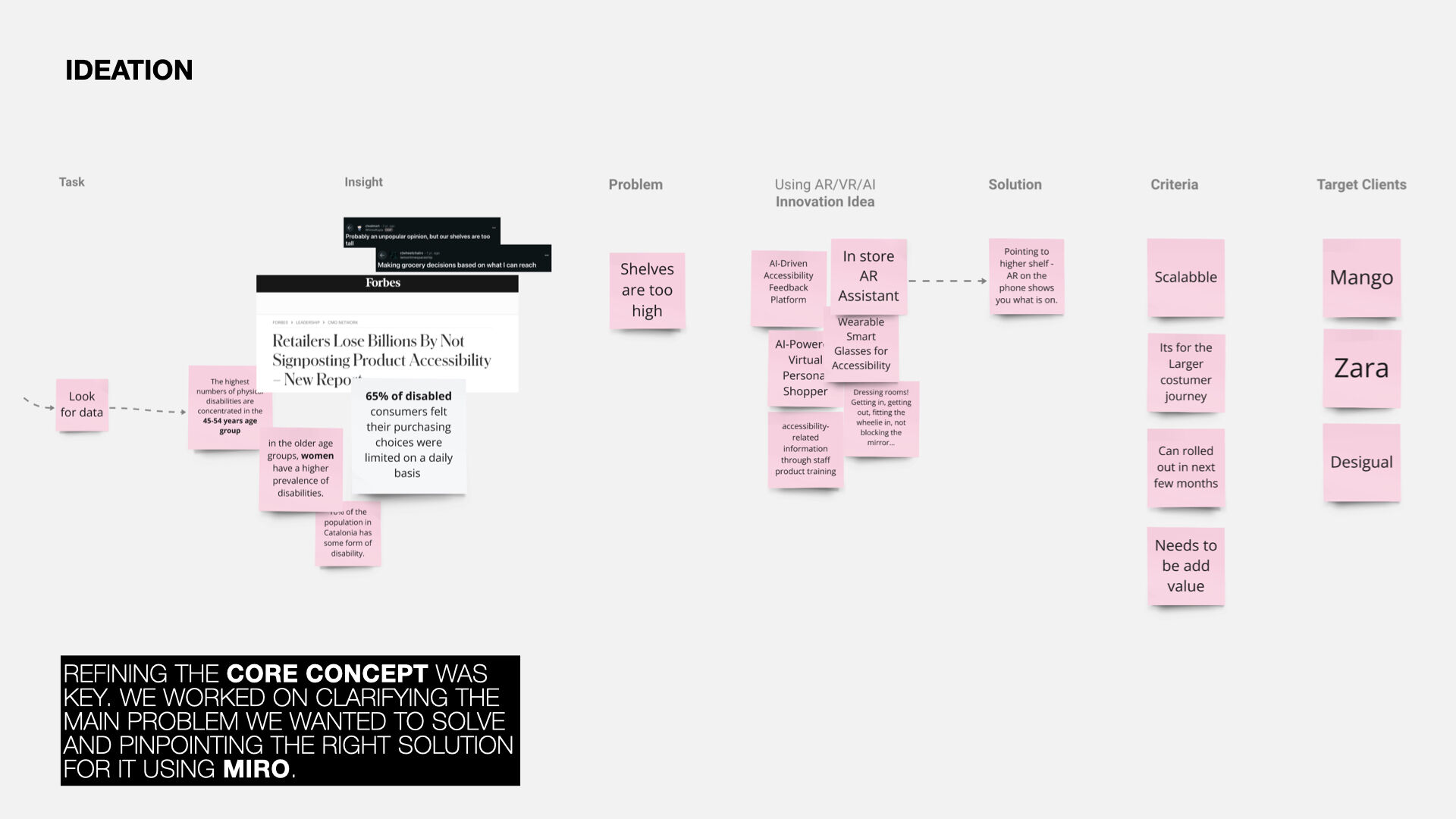
identifying key accessibility barriers in in-store shopping experiences
understanding how these barriers impact autonomy and decision-making
exploring how AR could support interaction without requiring physical effort
evaluating opportunities for scalable and realistic implementation
Based on these insights, the project investigates how AR interactions, assistive design, and real-time information access can improve accessibility in retail.
Research Approach
The project followed a behavior-informed UX research approach combining accessibility research, market analysis, and structured problem framing.
Frameworks & Methods:
Desk research (accessibility + retail industry reports)
Market & trend analysis (AR/VR in retail)
Affinity mapping (insight clustering in Miro)
Empathy mapping (user perspective building)
Root cause analysis (5 Whys)
Stakeholder mapping (ecosystem understanding)
Research focus:
Physical barriers in retail environments
User autonomy vs dependency on staff
Impact of store design on user experience
Opportunities for assistive technologies
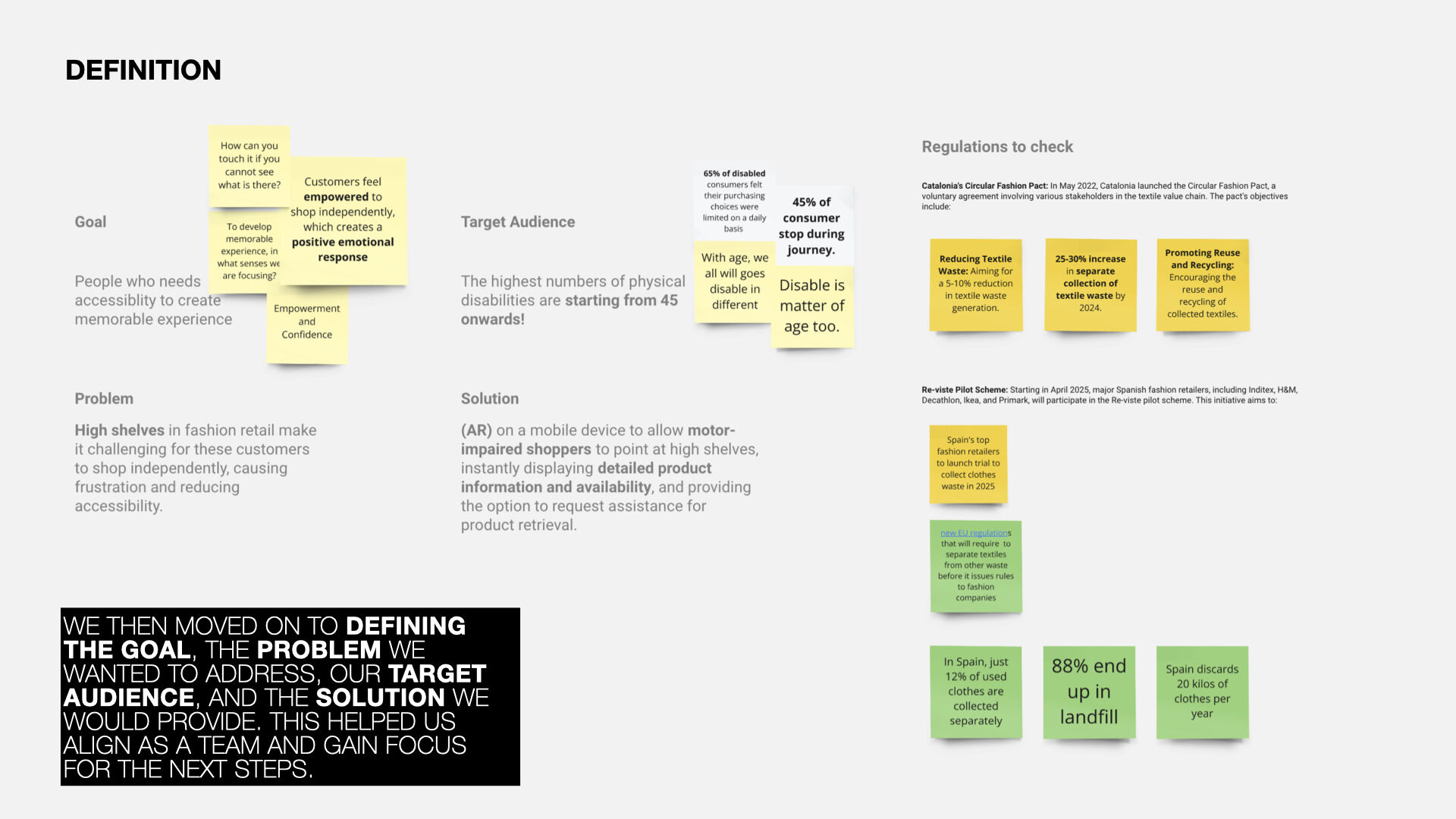
These methods helped translate fragmented observations into clear problem definitions and actionable design opportunities.
Results
The research revealed that physical retail environments often exclude users with disabilities by design.
Key findings include:
High shelves and inaccessible layouts limit independent interaction with products
Users rely heavily on staff assistance, reducing autonomy and comfort
Accessibility barriers create frustration and can lead to abandoned purchases
Retail spaces are optimized for efficiency, not inclusivity
Accessibility challenges increase with age, expanding the affected user group
Additionally, research showed that:
65% of disabled consumers report limitations in purchasing decisions
Accessibility issues represent both a usability gap and a missed business opportunity

Design outcome
These findings informed the development of AR Shelves Initiative, a concept that:
enables users to access product information without physical reach
reduces dependency on staff
integrates seamlessly into existing shopping behaviors
transforms accessibility into an interactive experience